
Could D-chiro-Inositol Help Trigger Autophagy and Promote Healthy Aging?
Posted on Dec 3rd 2025 | By: Chiral Balance
We often think of supplements like inositols in the context of metabolic health — blood sugar, insulin sensitivity, lipids. But intriguing new research suggests that one form, D-chiro-inositol (DCI), may reach beyond metabolism: it might influence aging, stress resistance, and even longevity through pathways tied to autophagy and cellular stress responses.
Here’s a look at what science currently says about DCI, autophagy, and what this could mean for health — and what we don’t yet know.
? What Is D-chiro-Inositol — A Quick Primer
-
D-chiro-inositol is one of several isomers of inositol, a molecule present in many foods including legumes and buckwheat. ScienceDirect+2MDPI+2
-
In humans and animals, DCI is known for its insulin-sensitizing, anti-inflammatory, and antioxidant effects. ScienceDirect+2PubMed+2
-
In preclinical models (e.g., mice), DCI has been shown to improve metabolic parameters — reduce blood lipids, lower hepatic fat accumulation under a high-fat diet, and support healthier adipose tissue behavior. PubMed+1
So far, DCI has been studied extensively in metabolic contexts (diabetes, obesity, liver health). But newer work is exploring a broader role.
Evidence That DCI Influences Aging, Stress Resistance, and Autophagy-Related Pathways
Emerging lab studies — mostly in simple organisms like worms and flies — suggest DCI might have anti-aging, stress-protective, and possibly autophagy-modulating effects.
✅ In Worms: Boosting Longevity & Stress Resistance

A 2023 study showed that DCI extended lifespan of the nematode Caenorhabditis elegans by up to ~30%. ScienceDirect+1
-
DCI increased total antioxidant capacity, reduced reactive oxygen species (ROS), and raised activity of antioxidant enzymes (like SOD and catalase). ScienceDirect+1
-
DCI also delayed neurodegeneration-like phenotypes in worm models of neurodegenerative disease (reducing accumulation of toxic proteins associated with Alzheimer’s, Parkinson’s, and Huntington’s disease). ScienceDirect+1
-
Mechanistically, the longevity and stress-resistance effects of DCI in worms required key transcription factors involved in stress response and longevity: DAF‑16 (a FOXO transcription factor), SKN‑1/NRF‑2, and heat-shock factor HSF‑1. ScienceDirect+1
These factors regulate antioxidant defenses, protein homeostasis, stress resistance — pathways closely tied to aging and cellular maintenance.
✅ In Flies: Longevity, Autophagy, Insulin Signaling
Another important study in the fruit fly Drosophila melanogaster found that DCI supplementation extended lifespan, improved stress resistance, and enhanced “health-span” indicators (mobility, anti-stress resilience). PubMed+1
Key molecular findings in flies:
-
DCI reduced activity in the insulin-insulin-like growth factor signaling (IIS) cascade (lower PI3K and Akt expression), increased expression of insulin-like peptide genes (e.g., Dilp5) and FOXO, and — importantly — upregulated genes linked to autophagy (like Atg1, Atg5, Atg8a/Atg8b), and increased lysosome numbers. PubMed+2Society for Developmental Biology+2
-
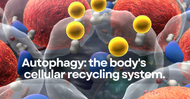
These molecular changes are consistent with enhanced autophagy — the process by which cells clear damaged proteins and organelles, recycle components, and maintain cellular “housekeeping.” PubMed+1
Thus, in flies the evidence suggests that DCI’s beneficial effects on longevity may be mediated, at least in part, by activation of insulin-signaling modulation + autophagy.
Why This Matters: Autophagy, Metabolism, and Aging Are Deeply Connected
-
Autophagy is central to cellular clean-up: It helps clear damaged proteins/organelles, reduces oxidative stress, prevents accumulation of toxic aggregates — all of which contribute to aging and age-related disease.
-
Insulin/IGF-1 signaling (IIS) is a well-known regulator of aging: Lowered IIS (or altered insulin sensitivity) often correlates with increased lifespan in multiple species. The balance of this pathway influences aging, metabolism, stress resistance.
-
Metabolism, oxidative stress, and inflammation often interconnect. Molecules like DCI that influence insulin sensitivity, antioxidant capacity, and inflammatory signaling may hit multiple “hallmarks of aging” at once: metabolic homeostasis, proteostasis, stress resistance. For related
metabolism insights from DCI studies
If DCI can safely modulate these pathways, it could — in principle — help promote healthier aging, beyond just metabolic benefits.
⚠️ But — There Are Important Caveats and Unknowns
While early studies are promising, several major limitations remain:
-
Most evidence comes from “model organisms” (worms, flies) — not mammals, and not humans. What works in a worm may not translate to humans.
-
In the worm study, although DCI extended lifespan and improved stress resistance, the authors found no evidence that DCI activated autophagy in that model. This suggests that the mechanisms may differ across species. ScienceDirect
-
Even in flies, while autophagy-related gene expression increased, it’s difficult to prove — especially in vivo and across tissues — that this leads to meaningful “clean-up” and reduced disease risk.
-
Aging in humans is far more complex than in worms or flies. Longevity and “healthy lifespan” depend on many factors: genetics, environment, diet, lifestyle, chronic diseases, cumulative exposure to stressors over decades.
-
There is currently no long-term human data showing that DCI supplementation improves longevity, delays age-related disease, or enhances autophagy in human tissues.
In short: DCI is a promising lead, but more research is essential — especially in mammals and humans.
What This Means for You — Realistic, Cautious Takeaways
If you’re considering DCI supplementation as part of a broader wellness strategy, here’s a balanced view:
-
DCI may offer more than metabolic benefits — possibly supporting cellular stress resilience, antioxidant defense, and pathways tied to healthy aging.
-
But treat it as experimental or supplementary — not a “fountain of youth.” The strongest evidence is in invertebrates, not humans.
-
It makes sense to pair DCI (or any supplement) with healthy lifestyle habits — balanced nutrition, regular exercise, sleep, stress management — because those factors strongly affect autophagy, oxidative stress, and metabolic health.
-
If future research (in mammals / humans) supports these early findings, DCI might become part of a broader “geroprotective” toolbox.
What’s Next — Where Research Should Go
To truly understand DCI’s potential in aging and autophagy, future research should:
-
Test DCI in mammalian models (mice, rats) for lifespan, health-span, and tissue-specific autophagy markers.
-
Perform long-term supplementation studies to assess safety, optimal dosing, and whether benefits persist or change over time.
-
Investigate whether DCI influences age-related disease outcomes (neurodegeneration, metabolic disease, organ function), not just surrogate markers.
-
Explore mechanistic pathways in human cells or tissues: does DCI activate autophagy? Does it modulate insulin/IGF-1 signaling, oxidative stress, inflammation in human-relevant contexts?
✅ Conclusion — A Promising Molecule, but Not a Miracle
D-chiro-inositol is more than just a metabolic supplement. Emerging data in worms and flies suggests it may influence key longevity pathways — antioxidant defense, stress resistance, possibly autophagy — through modulation of insulin signaling and stress-response transcription factors.
That said, the evidence is preliminary. Until we see robust mammalian or human studies, DCI should be viewed as an intriguing candidate for supporting healthy aging — but not a guaranteed “anti-aging pill.”
If you’re interested in natural ways to support longevity, DCI could be part of a broader, balanced approach. But don’t count on it alone.
Disclaimer: The information provided in this article is for educational purposes only and is not intended to replace professional medical advice, diagnosis, or treatment. Always consult your physician or a qualified healthcare provider before starting any new supplement, diet, or treatment plan, especially if you have a medical condition or are taking medications.